China’s “String of Pearls”
“Strengthen economic leadership, gain political leverage”
Harsh V. Pant and Premesha Saha
Introduction
This article surveys China’s ambitions in the Indian Ocean region.
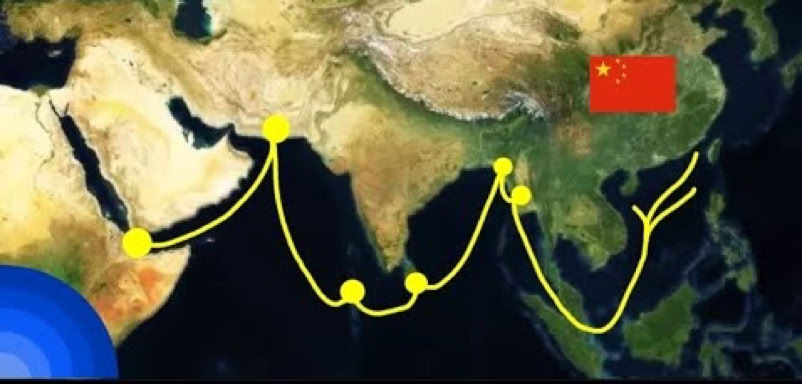
The defense contractor Booz Allen Hamilton (BAH) coined the term “String of Pearls” in 2004 to refer to “China’s network of military and trade facilities, along with maritime links, extending from mainland China to southern Port Sudan.”
In March 2007, BAH held an “Energy Futures in Asia” seminar on behalf of the Secretary of Defense. The seminar focused on Chinese and Indian energy strategies for the future.
Its report, published in April 2007, stirred my interest in the notion of the “Balkanization” of Energy Networks. Countries worldwide seek to end their dependence on other countries for energy as quickly as possible. They are negotiating and signing agreements as fast as they can to achieve this goal.
One result is that fragmented energy networks emerge that lack a standardized energy market design. In turn, this has produced unintended geopolitical consequences.
These geopolitical consequences of China’s String of Pearls lie at the heart of my discussion.
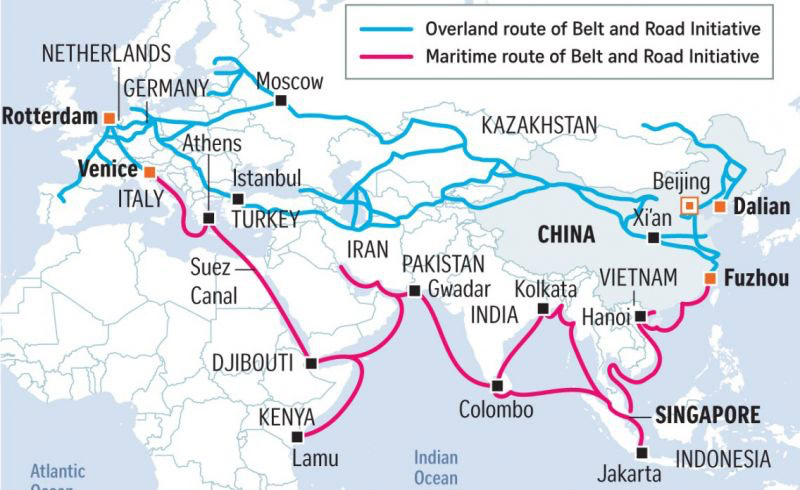
In 2013, President Xi Jinping launched the Belt and Road Initiative (BRI), a massive infrastructure project to expand China’s economic and political reach from East Asia to Oceania, Africa, Europe, and Latin America.
I have previously addressed China’s ambitions in the South China Sea in two articles, “China’s plan: South China Sea” and “Hainan to Singapore: SCS.”
Let’s now look at what China is up to in the Indian Ocean Region.
The Council of Foreign Relations has said,
“Xi’s vision included creating a vast network of railways, energy pipelines, highways, and streamlined border crossings, both westward … and southward, to Pakistan, India, and the rest of Southeast Asia.”
Harsh V. Pant and Premesha Saha have commented,
“Beijing’s aim, through the BRI, is to strengthen its economic leadership while gaining political leverage over its neighbors and asserting its presence on the global stage.”
I, like others, must be forgiven if we see military implications in the BRI. In the case of the Indian Ocean, I do not want to overdramatize Chinese military advantages in this region, not yet. At present, the Chinese military is tinkering around, but it bears watching.
Joseph Nye’s “counsel that ‘the best way to make an enemy of China is to treat it like one,’ leading to a self-fulfilling prophecy” weighs on my mind. China and the US are certainly in great-power competition. The cause-and-effect dynamics can be mind-boggling.
Observers agree that great-power competition is fragmenting the global economy and creating a wide range of geopolitical relationships among countries.
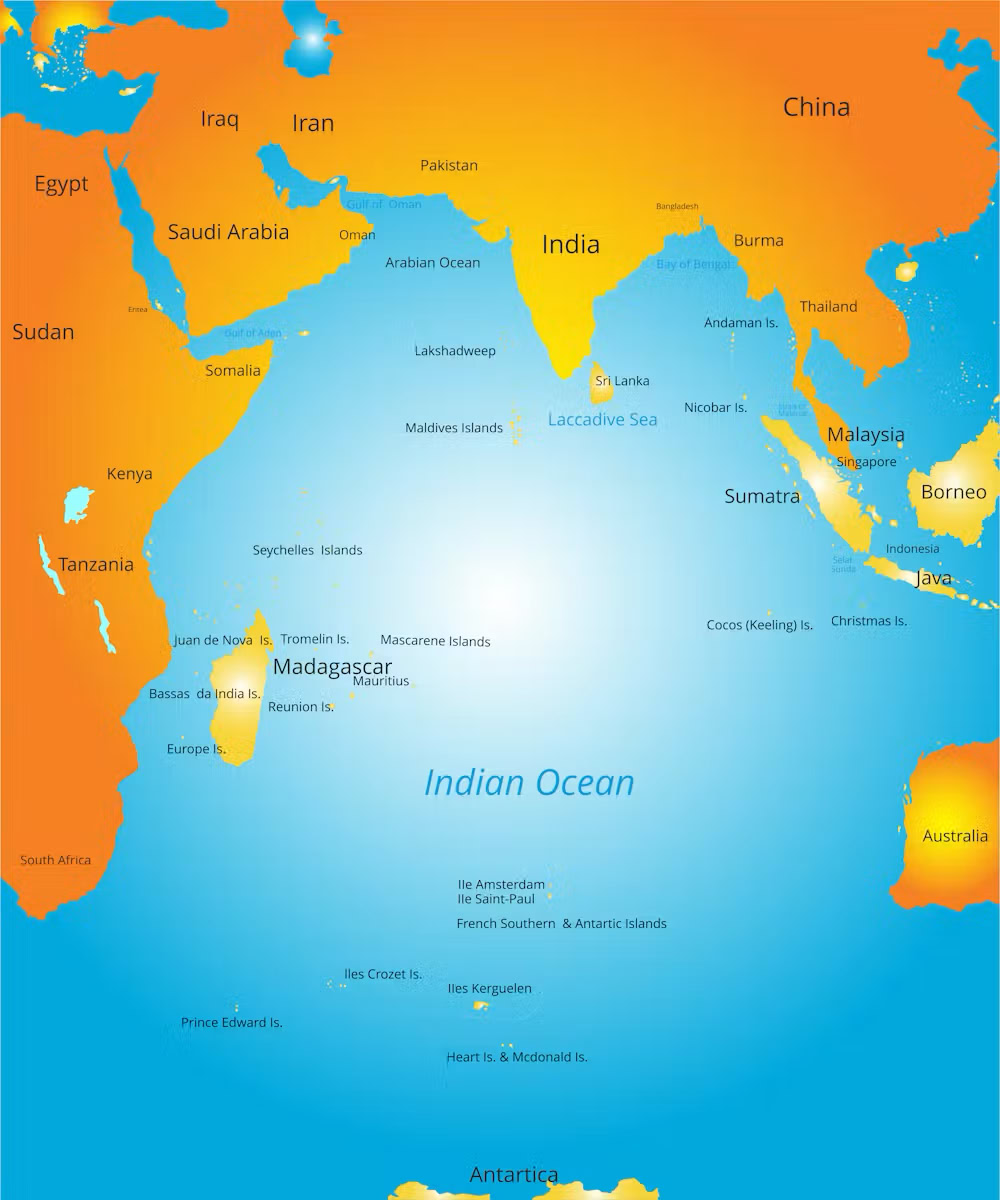
Let’s move forward and address China’s “String of Pearls” in the Indian Ocean region. I’ll move from east to west. A lot of maritime traffic flows through the Indian Ocean, so I looked at the deals China has hatched for ports along the way.
Chinese funded ports
China has established relationships with four countries of the Indian Ocean littoral that are yielding ports, a kind of “lilypad” approach the US has employed around the world. Note that most of China’s oil sails through the Indian Ocean.
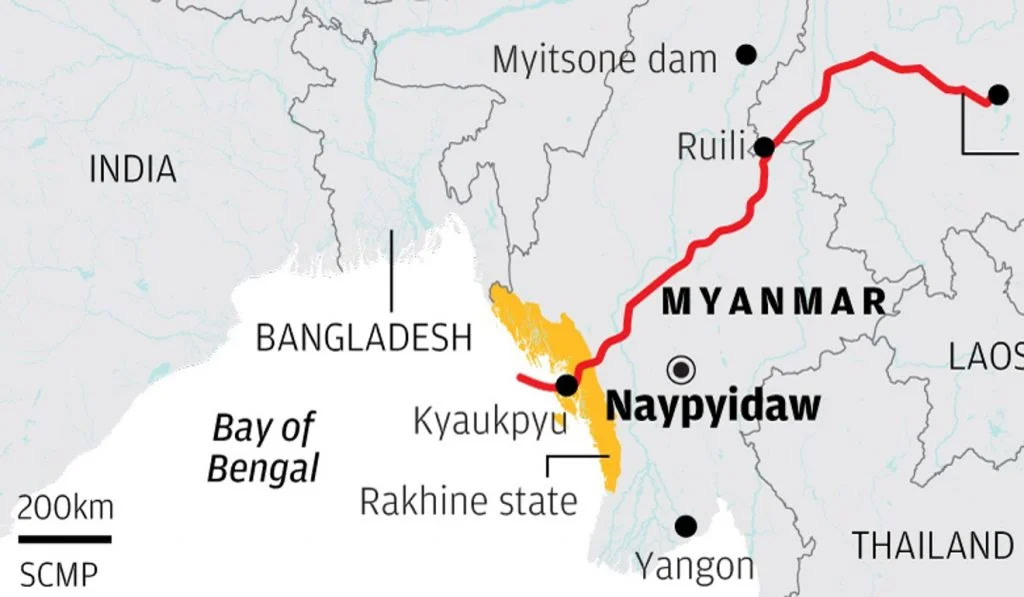
Myanmmar-Kyaukphyu
Myanmar and China have a strong relationship, but Myanmar is a basket case. General Min Aung Hlaing led a coup in 2021 and has ruled Myanmar since. The coup led to a civil war in 2021, and Myanmar continues to suffer from significant and complex ethnic conflicts, both of which persist to this day.
Both China and India are competing for Myanmar’s favor.
Kyaukphyu in Myanmar sits on the Bay of Bengal. Chinese companies largely owned by the state are constructing a deep-water port and industrial area there. The town is also the terminus of an oil pipeline to Kunming in the southwestern Chinese province of Yunnan. Kyaukphyu is attractive for a deep-water port because products can be transported overland to Kunming.
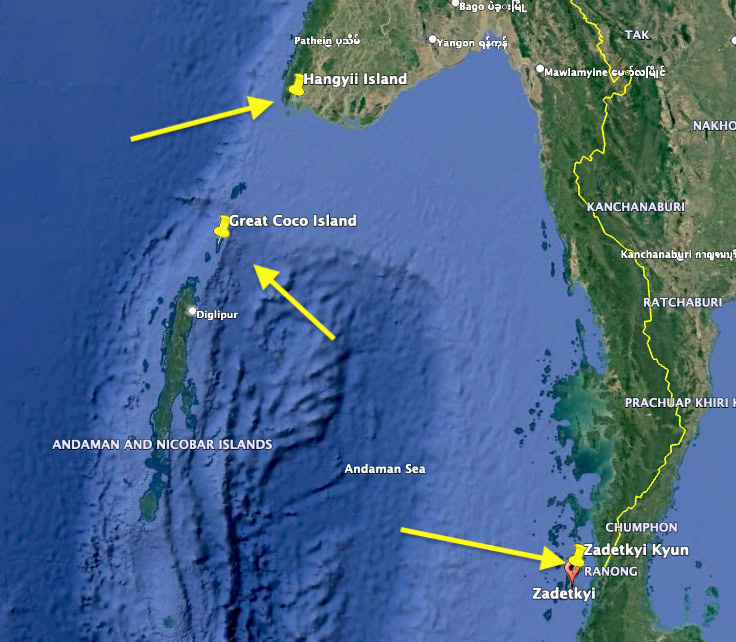
The China Briefing website has also mentioned Coco and Zadetkyi Kyun as developing Chinese outposts in Myanmar.
Chatham House has revisited past speculation that Myanmar’s Great Coco Island hosts a Chinese Signals Intelligence (SIGINT) site, but suggests it is more likely that the Myanmar military, called the Tatmadaw, might be building an airbase there, from which its aircraft could conduct military surveillance flights over the Indian Ocean, a capability India does not like.
Kartik Bommakanti, writing for the Observer Research Foundation of India, says the evidence is mounting that, at the very least, China is helping Myanmar develop its SIGINT capabilities on the island.
Bommakanti also suggests that Zadetkyi Kyun Island and Hangyii Island at the mouth of the Irrawaddy River may host SIGINT sites.
In the best-case scenario, Kyaukphyu could become a regional commercial hub. Zeyar Oo and Yonghong Dai have written,
“Full realization (of the Chinese development) has been impeded by several challenges, including political instability, local protests, insufficient cooperation between Myanmar’s government and Chinese investors, environmental concerns, and other potential risks.”
They add that China wants to avoid its ships transiting the Malacca Strait and, at the same time, improve its strategic standing in the Indian Ocean.
Chittogram (Chittagong), Bangladesh
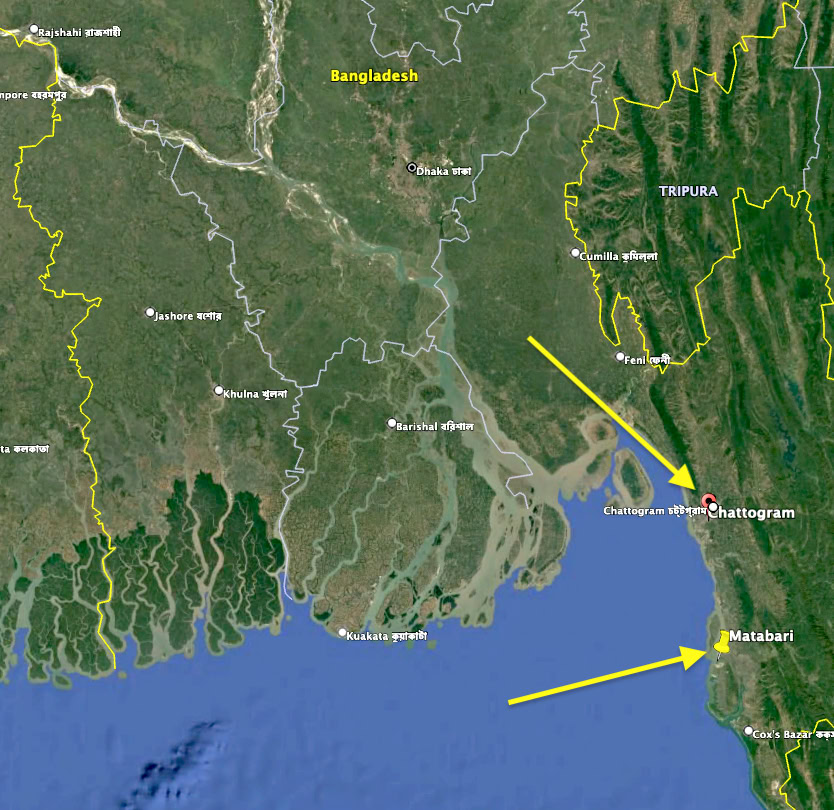
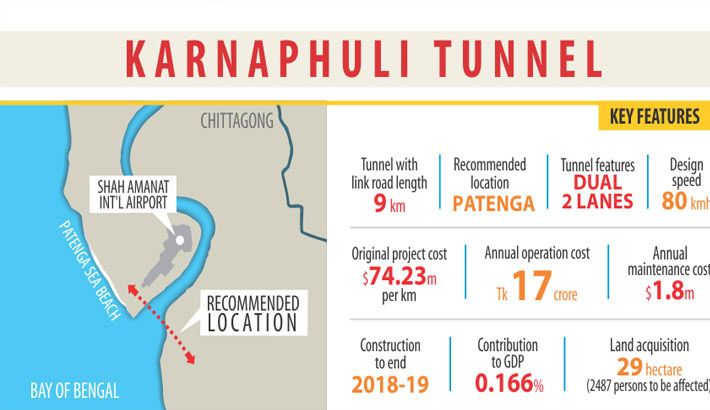
Chittogram sits on the Bay of Bengal in southern Bangladesh. There are two points to emphasize. First, the Port of Chittogram is Bangladesh’s main port. Second, the Karnaphuli Tunnel connects the Anwara sub-district of Chittogram District on the east side of the Karnaphuli to the main city of Chittogram on the west side via the Majer Char road. The tunnel opened in 2023. The Exim China Bank funded half of the $1.1 billion cost of the tunnel.
Bangladesh and China have launched a joint initiative to establish a Chinese Economic and Industrial Zone in Anwara. The investment cost is $1.3 billion. The Chinese Road and Bridge Corporation (CRBC) will develop the zone.
Furthermore, a plan is underway to develop the Matabari Deep-Sea port on Maheshkhali Island, about 73 miles south of Chittogram. This port would be Bangladesh’s first deep-sea port. Construction has begun.
The Matabari Port is currently a joint venture between the Chittogram Port Authority (CPA) and the Japan International Cooperation Agency (JICA), though some expect India to invest as well. The Matabari Port would position Bangladesh as a major transshipment hub.
China attempted to establish a port at Sonadia on the south side of Maheshkhali Island, but Bangladesh rejected the proposal in favor of a Japanese-assisted port at Matabari. There has been speculation that India pressured Bangladesh to reject China's Sonadia port proposal.
Bangladesh is an exceedingly poor country. In 2024, it emerged from 15 years of authoritarian rule and is attempting to establish a democracy. The country is also hosting about one million Rohingya refugees who fled Myanmar. Furthermore, it is plagued by piracy, crime, terrorism, civil unrest, and kidnapping.
India is attempting to help. It is not clear whether the country’s attempt to democratize will work. India and the US care about this; China does not.
Pakistan-Gwadar
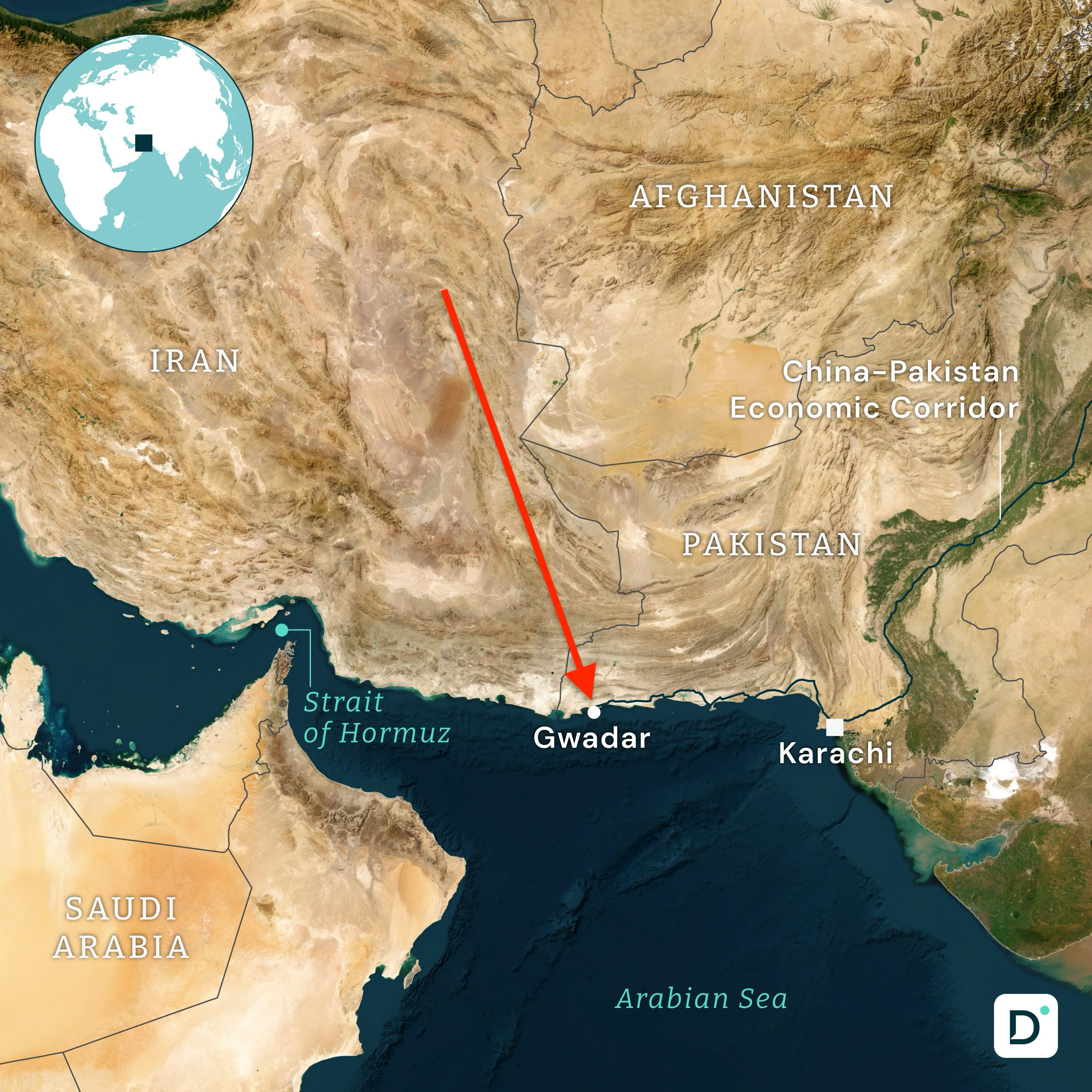
Gwadar, Pakistan, lies in the country’s southwesternmost corner, overlooking the Gulf of Oman and near the Strait of Hormuz. The China Maritime Studies Institute’s China Maritime Report No. 7, “Gwadar,” states that China considers it a “strategic strongpoint.”
Chinese companies operate the port, and China is the chief financier. It is part of the Greater China-Pakistan Economic Corridor (CPEC) and a step in the Belt and Road plan. China is said to receive 91 percent of operating revenue and 85 percent of revenue generated by the free zone.
Pakistan views Gwadar as a commercial port. Chinese naval vessels that have visited Pakistan so far seem to prefer docking in Karachi. The consensus is that, so far, Gwadar is unlikely to become a strategic hub. Part of the problem is that many residents there want independence from Pakistan.
Djibouti
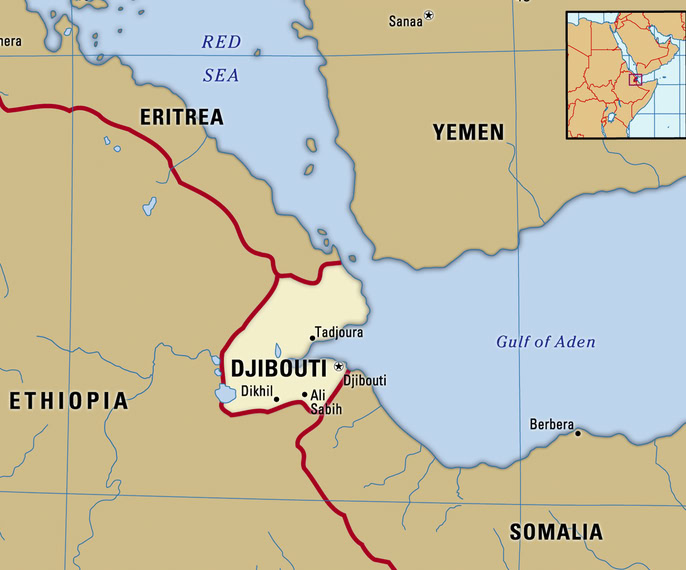
China opened its counter-piracy facility in Djibouti in 2017. It appears to be a forward logistics support facility and is China’s first and only overseas naval base. Djibouti signed a defense agreement with China in 2014.
The China Merchants Group (CMG) invested heavily in the Doraleh Multipurpose Port, China's largest port project in East Africa.
CMG also operates the port facility. Chinese firms are building a $3.5 billion Djibouti Free Trade Zone (FTZ). China’s Exim Bank has loaned $1.2 billion to connect a rail line between Djibouti and Ethiopia and to build a pipeline that provides Djibouti with potable water from Ethiopia.
Over half of Djibouti's debt is owed to China.
Djibouti guards the Bab el-Mandeb Strait between the Gulf of Aden and the Red Sea. The US operates a major base in Djibouti, which is home to the Combined Task Force Horn of Africa (CJTF-HOA).
Northern Sea Route
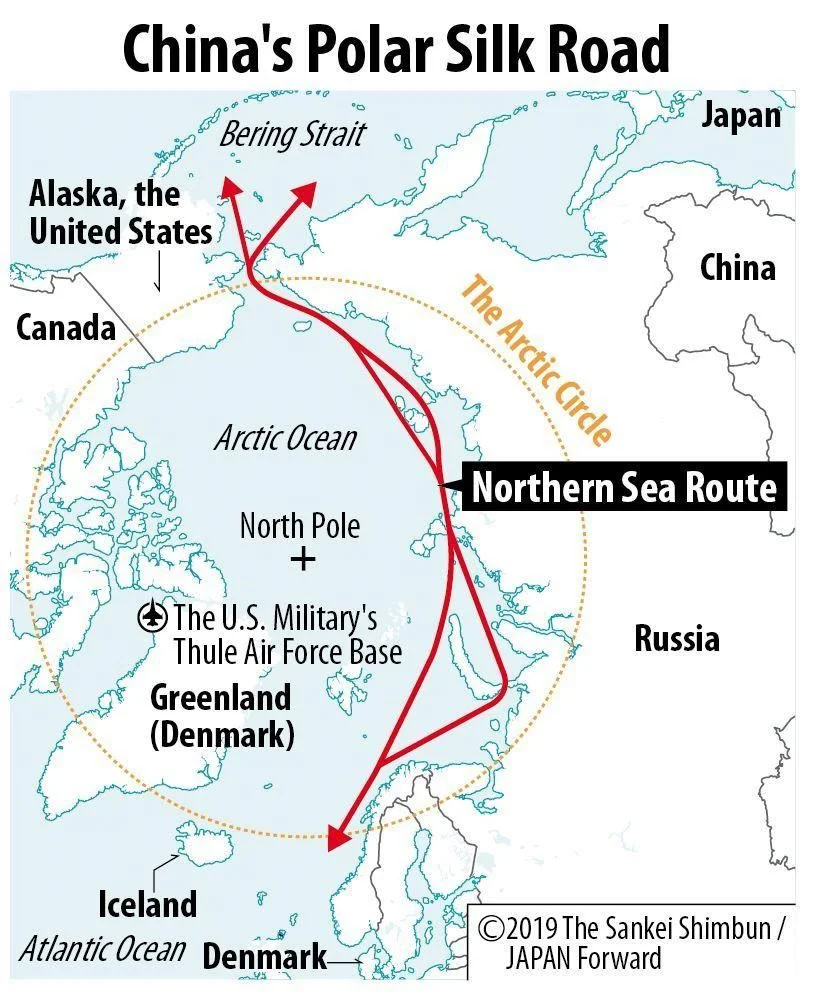
The String of Pearls was meant to refer to the broad Indian Ocean and its littoral. I wish to remind readers, however, that China is also stringing its pearls in the Arctic, using Russia’s Northern Sea Route (NSR). The NSR is available only part of the year, but China is using it more and more. I addressed the NSR in my report, “USCG Healy: ‘High North’ is in play.”
The NSR runs along Russia’s northern coast through the Barents, Kara, Laptev, East Siberian, and Chukchi Seas and extends about 3,000 miles. Russia and its energy companies are developing major natural gas fields on the Yamal and Gydan Peninsulas and oil fields on the Taymyr Peninsula.
Russia intends to continue expanding its fossil fuel activities in the High North. It will expand extraction and continue developing the NSR to distribute the product to markets.
China is using the NSR to import Russian crude oil and transport it to Chinese ports. The Norwegian Centre for High North Logistics (CHNL) estimated that in 2025, twenty-three oil tankers sailed eastbound through the NSR. Three eastbound LNG tankers also made the transit.
Seven of these tanker transits were headed to China, while eleven arrived in Russia’s Far East, possibly for transshipment to China.
Thus far, China’s PLAN has not operated in the NSR. It has operated only near the Bering Strait. However, Chinese naval research vessels have been operating in the Arctic, most likely to map the seafloor for submarine use.
South China Sea
I have previously addressed China’s ambitions in the South China Sea (SCS) in two articles, “China’s plan: South China Sea” and “Hainan to Singapore: SCS.” These two reports show how tyhe PLAN and the Chinese Coast Guard have been active in the SCS.
A note about India
I cannot go into detail here, but I must acknowledge that the Indian Ocean has been a trade thoroughfare for centuries. India is a major player in the region. Its leaders and researchers are well aware of China’s String of Pearls and the Belt and Road Initiative. They are also aware of their border with China and of neighboring Pakistan’s close ties to China.
Darshana M. Baruah, Nitya Labh, and Jessica Greely have noted that India is “the resident naval power in the Indian Ocean. With over 7,500 kilometers of coastline, 14,500 kilometers of navigable waterways, and 212 active ports (12 government-owned and 200 immediate and minor ports), India relies heavily on the Indian Ocean.”
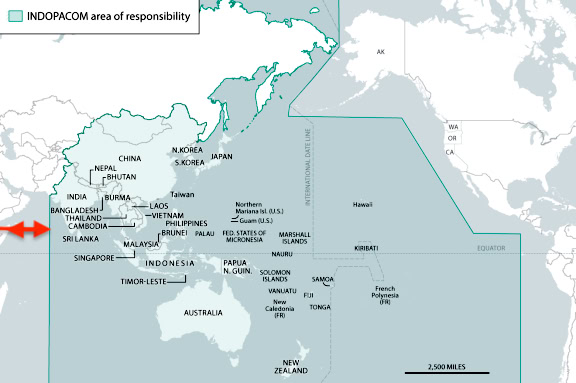
India’s navy considers the entire Indian Ocean its area of responsibility (AOR). Traditionally, the Western Powers have dominated the region, but China and others are rising to the challenge.
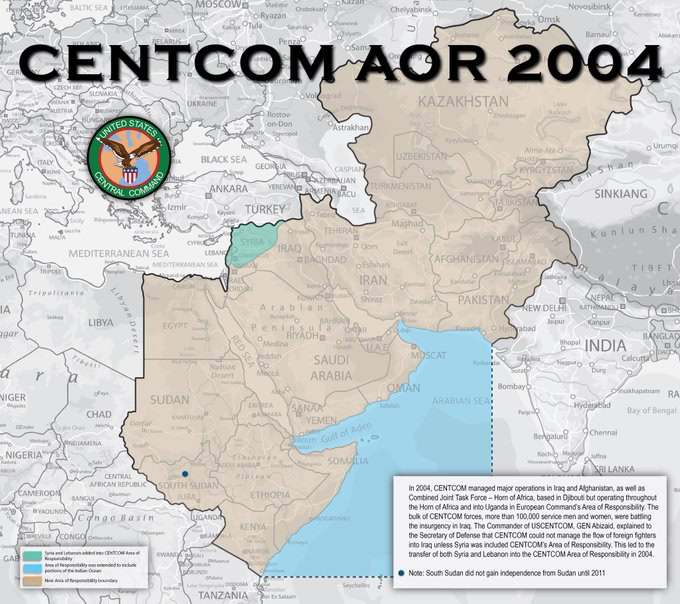
I’ll note that the US Pacific Command’s AOR includes the Pacific Ocean up to the west coast of India, leaving what Sayantan Haldar and Vivek Mishra call a “missing piece of the Indo-Pacific puzzle,” the Western Indian Ocean, extending to the eastern shores of the African continent, the Arabian Peninsula, Iran, and Pakistan.
The US military has recognized this missing piece of the puzzle but has assigned responsibility for it to US Central Command (CENTCOM) and US Africa Command (AFRICOM). I see this as a problem for US command and control.
Last thoughts, for the moment, lots fo learn
My first thought is that China is gambling with its massive investments in the String of Pearls. Huge obstacles and uncertainty plague its efforts. Nonetheless, China is moving ahead.
Second, you can imagine the “cause-and-effect” reactions the String of Pearls might trigger, including the new relationships it might create.
Hung Tran of the Atlantic Council has it right. Geopolitics is fragmenting the global economy. As the global economy fragments, geopolitical relationships among countries will fragment as well, with many unintended consequences. Hung Tran goes on to say,
“Fundamentally, the problem is the absence of a mutually agreed framework allowing for the peaceful coexistence between two different and largely incompatible political and economic systems—represented by the US and China.”
Ed Marek, editor
Marek Enterprise
224 N Barstow St Suite 426
Eau Claire, WI 54703
© Copyright 2026